
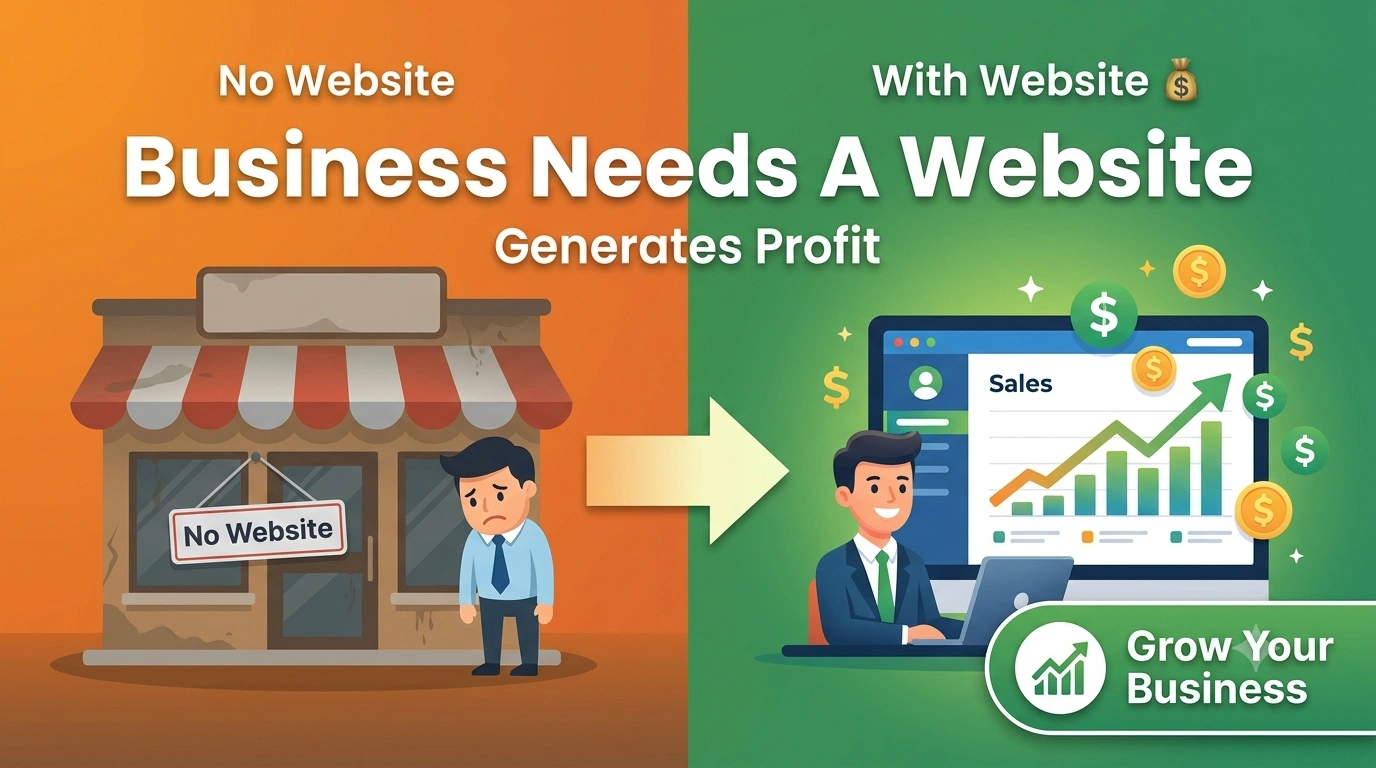
If you have been wondering whether investing in a professional website is worth the expense, the short answer is yes. A website is not just an online business card; it is your most powerful marketing asset and an active revenue-generating tool.
Here is a deep dive into why your business needs a website, and exactly how it translates into direct, measurable profit.
1. 24/7 Accessibility: Your Digital Storefront Never Closes
Unlike physical stores with strict operating hours, a website is open 24 hours a day, 365 days a year.
-
Why you need it
Your target customers lead busy lives. They often search for services, read reviews, and make purchasing decisions late at night or during their lunch breaks when your physical doors are locked.
-
How it’s profitable
By providing answers, pricing, and booking options automatically at any hour, you capture leads and sales that would otherwise go to competitors who are online. It’s like having an efficient salesperson working around the clock.
2. Establishing Unshakeable Trust and Credibility
Consumer behavior has shifted dramatically. Before making a purchase or booking a consultation, the vast majority of people will search for your brand name online. If they don’t find a dedicated website, they will likely hesitate.
“According to consumer behavior studies, over 70% of people are unlikely to trust a business that only has a social media page and lacks a professional website.”
— Key Statistic
A website with a custom domain (like yourbusiness.com) signals to the market that you are established, legitimate, and serious about your work. It provides a dedicated space to showcase your case studies, professional certifications, and positive client testimonials.
3. Passive Lead Generation and Organic Traffic (SEO)
Once your website is optimized for search engines (SEO), it starts working for you passively. When local customers search for keywords related to your industry—for example, “best emergency plumber near me”—a well-optimized website will appear in their search results.
The Profit Formula
- 1 Organic Traffic: High-quality SEO attracts free visitors actively searching for solutions.
- 2 Leads: Targeted landing pages convert those visitors into email signups or inquiry forms.
- 3 Paying Clients: Structured, structured follow-ups and clear booking processes seal the deal.
Unlike paid advertising, where the traffic stops the moment you stop paying for ads, SEO keeps driving potential clients to your site for months or years after your content is published.
4. Drastically Reducing Your Customer Acquisition Costs (CAC)
Traditional advertising (radio, print, billboards, and flyers) is expensive, difficult to track, and has a very short shelf life. By contrast, digital marketing centered around your website is incredibly cost-effective:
| Marketing Medium | Tracking | Lifespan | Cost-to-Reach |
|---|---|---|---|
| Traditional Print/Flyers | Poor (Hard to track ROI) | Very Short (Discarded) | High |
| Social Media Ads | Good (Pixel tracking) | Short (Budget bound) | Medium |
| SEO Website Content | Excellent (Google Analytics) | Long-term / Permanent | Low |
By using your website to answer common customer questions, publish helpful guides, or host an interactive FAQ section, you save countless hours on customer service while warming up prospects before they ever pick up the phone.
5. Multiple Streams of Digital Monetization
A website allows you to scale your business far beyond your local geographic boundaries. Here are some of the most profitable ways businesses leverage their site to create new revenue streams:
Direct E-commerce Sales
Sell physical products, digital guides, templates, or software directly to a global audience.
Online Booking and Scheduling
Let clients book consults or class packages automatically with integrated payment gateways.
Subscription Models
Lock premium resources, premium content, video tutorials, or forums behind a monthly billing gateway.
Inbound Contact Forms
Directly collect qualified leads and high-intent quotes on auto-pilot straight into your CRM.